
The Gentle Piano Practice System
Welcome: You Are Not Behind
If you’re listening to this or reading it right now, I want to start with something very important.
- You are not behind.
- You are not too old.
- And you have not missed your chance to learn piano.
Many adults—especially later in life—quietly worry that they’ve started too late.
They see others who began as children, or who seem to play effortlessly, and they assume they are somehow at a disadvantage.
That belief is understandable.
But it is not true.
Learning piano as an adult is not a failure to catch up.
It is a choice—and a very meaningful one.
When you learn piano now, you are not doing it to impress anyone.
You are not doing it for exams or competitions.
You are doing it because you want to—for enjoyment, for relaxation, for mental stimulation, or simply because music has always spoken to you.
That motivation matters far more than age.
In fact, adults bring strengths to piano learning that children simply don’t have.
- You understand patience.
- You understand commitment.
- You understand how to enjoy the process rather than chase constant rewards.
And most importantly, you understand yourself.
This guide is not about pushing harder or practicing longer.
It is not about forcing progress or proving anything.
This is about learning piano in a way that feels calm, manageable, and kind.
You may notice that your memory doesn’t work the way it used to.
That’s normal.
You may notice that frustration appears more quickly than you’d like.
That’s normal too.
Nothing is wrong with you.
It simply means the approach needs to change.
And that is exactly what this system is designed to do.
Over the next chapters, you will learn how to:
-
Practice in short, comfortable sessions
-
Make progress without pressure
-
Handle memory lapses calmly
-
And enjoy piano without frustration or self-criticism
You do not need discipline.
You do not need willpower.
And you certainly do not need to be “hard on yourself.”
You only need a gentle, consistent approach that works with you—not against you.
So as you continue, I invite you to let go of comparison.
Let go of timelines.
Let go of the idea that progress must look a certain way.
This is your piano journey.
At your pace.
For your enjoyment.
And you are exactly where you need to be.
Take a slow breath.
Relax your shoulders.
And when you’re ready, let’s move on together.
Why Traditional Practice Advice Doesn’t Work for Adults
Before we talk about how often to practice or what to practice, we need to clear something important out of the way.
Much of the advice you may have heard about piano practice was not designed for adults.
It was designed for children.
Or for students training toward exams.
Or for people who could sit at a piano for long periods without mental or physical fatigue.
When adults follow this advice, they often feel discouraged very quickly.
You may have heard things like:
“Practice every day.”
“Thirty to sixty minutes is ideal.”
“Don’t stop until you get it right.”
On the surface, this sounds sensible.
But for many adults, it leads to exactly the opposite result.
Instead of progress, it creates pressure.
Instead of confidence, it creates frustration.
And instead of enjoyment, it creates self-doubt.
The problem is not you.
The problem is the method.
As we get older, the brain and body respond differently to learning.
Concentration fades more quickly.
Mental fatigue arrives sooner.
And frustration can build silently until it suddenly feels overwhelming.
That does not mean learning is harder.
It means learning needs to be gentler.
For adults, long practice sessions often reduce learning rather than improve it.
When the mind becomes tired, mistakes increase.
When mistakes increase, confidence drops.
And when confidence drops, many people begin to avoid the piano altogether.
This is why so many well-meaning adults say,
“I just don’t seem to be making progress,”
or
“I feel like I should be better by now.”
They are trying to learn piano in a way that no longer suits them.
Children can repeat something endlessly without judgment.
Adults tend to evaluate every mistake.
They replay errors in their minds.
They quietly criticise themselves.
That inner pressure is far more exhausting than the physical act of playing.
This is why this system does not focus on how much you practice.
It focuses on how you feel while you practice.
A short, calm session is far more powerful than a long, forced one.
Stopping early is often smarter than pushing through.
And consistency over time matters far more than intensity in a single day.
You are not here to train like a professional musician.
You are here to enjoy music, engage your mind, and feel good sitting at the piano.
That requires a different approach.
In the next chapters, you will learn what realistic practice looks like for adults — how often to sit down, how long to stay, and how to finish each session feeling calm rather than drained.
For now, I want you to remember one thing.
If past advice has made you feel discouraged, overwhelmed, or inadequate, it was not because you failed.
It was because the advice was never meant for you.
And from here on, we do things differently.
What Progress Really Looks Like After 60
At this stage, it’s important to talk about progress—because many adults quietly misunderstand what progress should look like.
For years, we are taught to measure progress by speed.
How quickly we improve.
How fast we move from one piece to the next.
How soon we can play without mistakes.
But after 60, progress often looks different.
And that is not a problem.
It is simply a change in perspective.
Progress is not about racing forward.
It is about feeling more comfortable each time you sit at the piano.
Sometimes progress means your hands feel a little more familiar on the keys.
Sometimes it means you don’t panic when you make a mistake.
Sometimes it means you remember a section more easily than last week.
These are real improvements—even if they don’t feel dramatic.
Many adults expect progress to feel obvious and constant.
When it doesn’t, they assume something is wrong.
But progress after 60 is often quiet.
It shows up as confidence rather than speed.
As calm rather than perfection.
As enjoyment rather than pressure.
You may notice that a piece you struggled with last month now feels less intimidating—even if it’s not perfect.
That is progress.
You may notice that you can start playing without needing to “warm up” mentally for ten minutes.
That is progress.
You may notice that you no longer stop completely when you make a mistake.
That is progress too.
This kind of progress is not flashy.
But it is meaningful—and it lasts.
Another important shift is understanding that progress is not always visible from one day to the next.
Some days will feel easier.
Some days will feel heavier.
That does not mean you are moving backward.
Learning at this stage happens in layers.
The mind absorbs more than it shows.
And improvements often appear suddenly after a period that felt slow.
This is why patience matters more than effort.
If you measure yourself by how you feel at the piano
How relaxed you are, how willing you are to sit down again tomorrow — you will notice steady improvement over time.
If instead you measure yourself by mistakes or speed, frustration will creep in.
So let’s redefine progress together.
Progress is sitting at the piano without dread.
Progress is playing through a piece without stopping, even with imperfections.
Progress is enjoying the sound you create, even when it’s simple.
And perhaps most importantly, progress is wanting to return.
If you are still coming back to the piano—
- still curious,
- still engaged,
- still listening
… then you are moving forward.
In the next chapter, we’ll talk about comparison—and why letting go of it may be the most freeing step you can take in your piano journey.
Letting Go of Comparison (Especially to Younger Players)
One of the quiet challenges many adults face when learning piano is comparison.
It often happens without warning.
You hear someone play and think,
“They’re so much better than me.”
Or you remember someone who started as a child and think,
“I’ll never catch up.”
Sometimes the comparison isn’t even real.
It’s a memory, a video, or an idea in your mind.
And yet, it can drain motivation almost instantly.
Comparison is powerful because it shifts your focus away from your own experience and places it on someone else’s timeline.
But here’s something important to understand.
You are not on the same journey as someone who started at five years old.
You are not training for the same goals.
And you are not learning under the same conditions.
Comparing yourself to a younger player is like comparing a peaceful walk to a sprint.
Both are movement—but they serve completely different purposes.
Younger learners often absorb information quickly, but they also rely heavily on instruction and external structure.
Adults bring something different.
You bring intention.
You bring emotional understanding.
You bring the ability to appreciate music in a deeper way.
And perhaps most importantly, you bring choice.
You are here because you want to be—not because you have to.
Comparison also ignores something very human.
- No one else has your hands.
- No one else has your history.
- No one else has your reasons for sitting at the piano.
Your progress is personal.
When comparison creeps in, it often brings harsh self-talk with it.
Thoughts like:
“I should be better by now.”
“I’m too slow.”
“I’m not talented.”
These thoughts feel convincing—but they are not helpful.
Talent is not what keeps adults learning piano.
Kindness toward yourself does.
Every time you notice comparison, gently bring your attention back to something simple.
The sound of a chord.
The feel of the keys.
The fact that you showed up at all.
That alone is enough.
There will always be someone who plays faster.
There will always be someone who started earlier.
That does not take anything away from your experience.
Music is not a competition.
It is a relationship—between you and the instrument.
And like any relationship, it grows best when there is patience, curiosity, and care.
As you continue, practice noticing when comparison appears — and then letting it pass without judgment.
You don’t need to argue with it.
You don’t need to fight it.
Just return to your own piano.
Your own pace.
Your own reasons.
In the next chapter, we’ll talk about setting a new goal—one that replaces pressure with calm consistency.

Your New Goal – Calm Consistency, Not Perfection
At this point, it’s time to gently redefine your goal.
For many adults, the unspoken goal is perfection.
Playing without mistakes.
Remembering everything.
Feeling confident every time.
It sounds reasonable—but it creates constant pressure.
Perfection is fragile.
One small mistake can make it feel like everything has fallen apart.
Calm consistency is different.
Calm consistency means returning to the piano regularly— without fear, without rushing, and without judging yourself.
It means showing up even when you don’t feel at your best.
It means allowing some days to feel easy and others to feel awkward.
And it means trusting that small, steady effort adds up over time.
This is how real learning happens.
When you practice calmly, your mind stays open.
When your mind stays open, memory improves.
And when memory improves, confidence follows naturally.
Perfection, on the other hand, tightens everything.
The hands tense.
The mind narrows.
Mistakes feel bigger than they are.
So instead of asking,
“Did I play this perfectly today?”
Try asking,
“Did I sit down calmly and give myself a few minutes with the piano?”
That is a much better measure of success.
Calm consistency also allows flexibility.
If you miss a day, nothing is lost.
If a session is short, it still counts.
If you repeat the same piece again, that is not failure—it is familiarity.
Learning later in life thrives on repetition without pressure.
You are not training your fingers alone.
You are training your nervous system to feel safe at the piano.
And safety leads to progress.
Over time, you may notice something interesting.
The more gently you approach practice, the more willing you are to return.
And the more often you return, the more progress quietly builds.
This is why consistency matters more than intensity.
A few calm minutes, repeated often, will take you further than occasional long sessions filled with frustration.
So let your new goal be simple.
Return to the piano calmly.
Stay only as long as it feels comfortable.
Leave with energy still in reserve.
That is success.
In the next chapter, we’ll begin looking at practical details—starting with how often to practice in a way that supports this calm, consistent approach.
How Often Should You Practice (Really?)
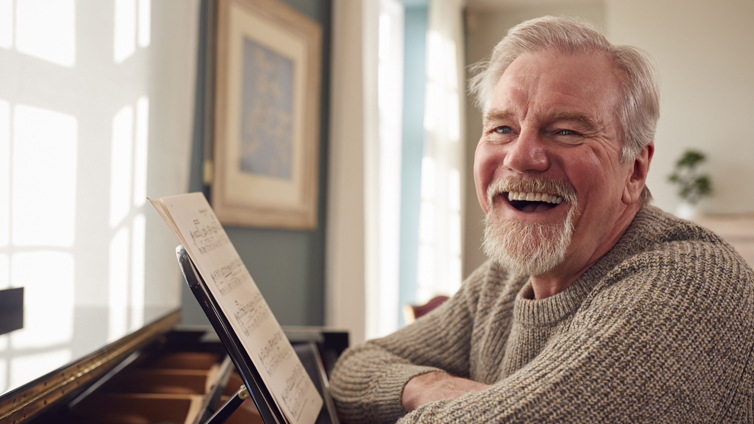
This is one of the most common questions adults ask.
“How often should I practice?”
And just as often, the answers they hear make them feel worse rather than better.
Daily practice is often presented as the only acceptable option.
Miss a day, and it feels like you’ve failed.
But for many adults, that expectation creates pressure—and pressure leads to avoidance.
So let’s talk honestly.
For adults learning piano later in life, practicing three to five times a week is not only enough—it is often ideal.
This may surprise you.
But learning does not disappear just because you skip a day.
In fact, rest days are an important part of learning.
When you step away, your mind continues to process what you’ve played.
Muscle memory settles.
Understanding quietly deepens.
This is why many people return to the piano after a short break and find things feel easier.
What matters most is not the number of days in a row.
What matters is returning consistently, without dread.
If you practice three to five times a week and feel calm doing so, you are doing it right.
Some weeks you may play more often.
Some weeks less.
That flexibility is a strength—not a weakness.
The goal is to build a rhythm that fits naturally into your life.
Think of piano like a gentle walk rather than a strict exercise routine.
You wouldn’t punish yourself for skipping a walk one day.
You would simply go again when it feels right.
It’s also important to recognise different types of practice days.
Some days you will feel focused and engaged.
Other days, simply sitting at the piano and playing something familiar is enough.
Both count.
If you ever find yourself thinking,
“I don’t have enough time today, so I won’t practice at all,” pause for a moment.
Even five minutes keeps the connection alive.
Short sessions are not “lesser” sessions.
They are often the most sustainable.
So instead of asking,
“Did I practice every day?”
Try asking,
“Did I return often enough that the piano still feels familiar and friendly?”
That is the real question.
In the next chapter, we’ll talk about how long to practice—and why shorter sessions often lead to better results and more enjoyment.

The Ideal Practice Length for Older Adults
Once people feel comfortable with how often to practice, the next question is usually this.
“How long should I stay at the piano?”
For many adults, this question carries quiet anxiety.
They worry that short sessions are not enough.
They worry they should be doing more.
But here is something important to understand.
For most older adults, ten to twenty minutes is an ideal practice length.
That may sound surprisingly short.
But it is long enough to make progress—and short enough to avoid mental fatigue.
Learning does not improve when the mind is tired.
In fact, once fatigue sets in, mistakes increase and confidence drops.
Shorter sessions protect your focus.
They allow you to stay present.
And they help you leave the piano feeling positive rather than drained.
Many adults have been conditioned to believe that longer practice equals better results.
But at this stage of life, quality matters far more than quantity.
Ten calm minutes, practiced with attention, can be more effective than an hour filled with frustration.
It’s also helpful to think of practice length as flexible rather than fixed.
Some days, ten minutes will feel perfect.
Other days, you may naturally stay for fifteen or twenty.
There is no prize for staying longer.
In fact, one of the most helpful habits you can develop is stopping while things still feel comfortable.
When you leave the piano with energy in reserve, your mind remembers the experience as pleasant.
And that makes you far more likely to return.
If you push until you are tired, annoyed, or mentally foggy, your brain begins to associate the piano with discomfort.
That association is what slowly pulls people away from practice.
So instead of asking,
“How long should I practice?”
Try asking,
“How long can I stay before I start to feel tired or tense?”
That moment—just before fatigue—is the perfect place to stop.
You are not cutting practice short.
You are protecting tomorrow’s motivation.
In the next chapter, we’ll talk about the “stop before tired” rule in more detail—and why ending practice early is one of the smartest things you can do.
The “Stop Before Tired” Rule
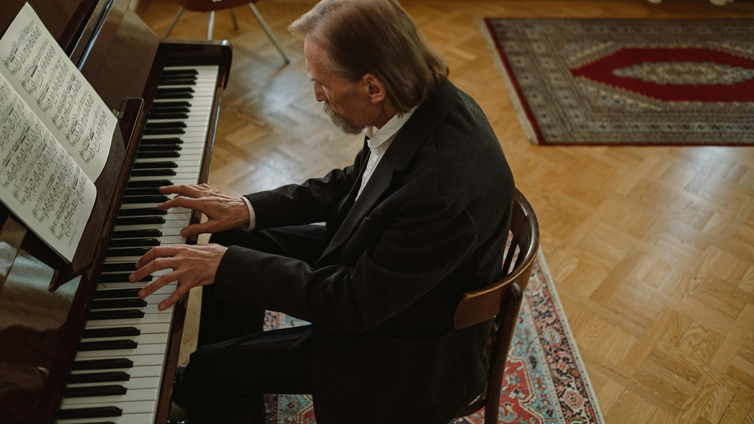
One of the most helpful habits you can develop at the piano is knowing when to stop.
Not when you are exhausted.
Not when you are frustrated.
But just before either of those things appear.
This is what we call the “stop before tired” rule.
Many adults continue practicing past the point where learning is still happening.
They push because they feel they should.
They don’t want to “waste” the session.
But once the mind becomes tired, practice changes.
Mistakes increase.
Focus fades.
And even simple things begin to feel difficult.
When this happens, the brain starts to associate piano practice with effort and strain.
Over time, that association makes it harder to return.
Stopping earlier prevents this.
When you stop while things still feel manageable, your brain records the experience as positive.
It remembers the piano as something safe and enjoyable.
This is not laziness.
It is strategy.
Learning improves when the nervous system feels calm.
Memory works better.
Coordination improves.
And confidence grows naturally.
You may notice subtle signs that it’s time to stop.
Your shoulders begin to tighten.
Your breathing becomes shallow.
You replay the same mistake again and again.
Or your thoughts start drifting.
These are not signals to push harder.
They are signals to pause.
Ending practice at that moment is one of the most productive choices you can make.
Think of practice like watering a plant.
Too little water doesn’t help—but too much can do harm.
Short, regular nourishment is what allows growth.
If you ever feel unsure, remember this.
Leaving the piano feeling calm is more important than squeezing in one more run-through.
That calm feeling carries forward.
It makes tomorrow’s practice easier.
It keeps the door open.
In the next chapter, we’ll talk about what to do on days when your energy is low—and how even five minutes can still be valuable.
What to Do on Low-Energy Days
Not every day will feel the same.
Some days you will sit down at the piano feeling clear and focused.
Other days, your energy will be low before you even begin.
This is normal.
Low-energy days do not mean you are losing ability.
They do not mean you are forgetting everything.
And they certainly do not mean you should stop learning.
They simply mean your body and mind are asking for a gentler approach.
On these days, the goal is not progress.
The goal is connection.
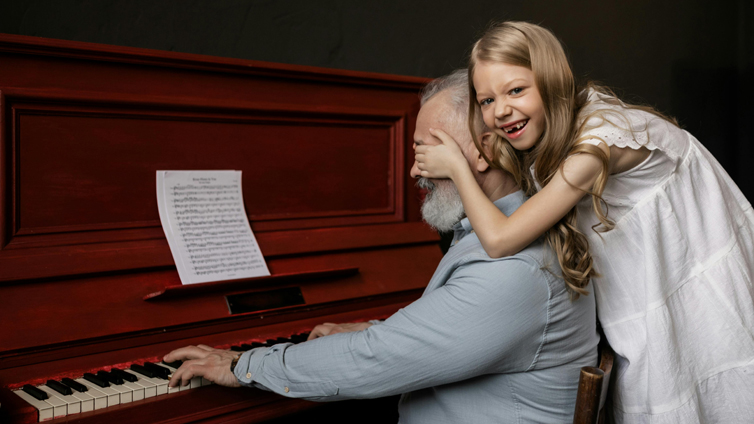
Even a few minutes at the piano keeps the relationship alive.
This is where the idea of a “maintenance practice” becomes very helpful.
A maintenance practice is short, simple, and familiar.
It might last only five minutes.
And that is enough.
On low-energy days, you might:
-
Play something you already know, very slowly
-
Gently move your fingers over the keys without worrying about mistakes
-
Listen to the sound rather than focusing on accuracy
There is no need to learn anything new.
In fact, trying to push forward on low-energy days often creates frustration.
And frustration teaches the wrong lesson.
Think of these days as a quiet check-in rather than a training session.
Five calm minutes tells your brain,
“The piano is still safe.”
“It’s okay to be here.”
That message matters more than you may realise.
Sometimes the hardest part is simply sitting down.
If that feels difficult, make the goal even smaller.
Sit at the piano.
Place your hands on the keys.
Play a few notes.
If you feel like stopping after that, you can.
You have already succeeded.
Many people are surprised to find that once they begin, energy slowly returns.
And if it doesn’t, stopping early is still the right choice.
Consistency is not about forcing yourself through tiredness.
It is about showing up kindly, again and again.
Low-energy days are part of the journey—not interruptions to it.
In the next chapter, we’ll talk about designing a gentle weekly rhythm that allows for both high-energy and low-energy days without pressure.
Weekly Rhythm vs Daily Discipline
Many adults believe progress only happens through strict daily discipline.
Practice every day.
Never miss a session.
Stay on schedule no matter what.
While this approach works for some, it often creates stress for others—especially later in life.
A rigid routine leaves little room for energy changes, health, family, or simply how you feel on a given day.
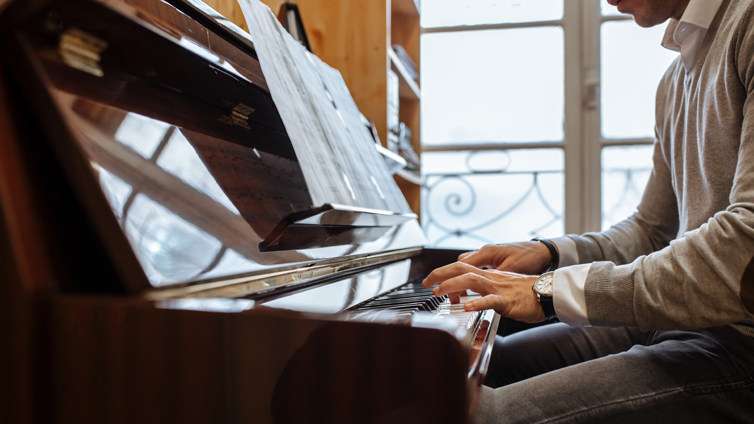
This is where a weekly rhythm becomes far more helpful than daily discipline.
A weekly rhythm focuses on balance rather than perfection.
Instead of asking yourself to practice every single day, you gently plan for several sessions across the week—knowing that some days will be stronger than others.
This removes the feeling of failure when life gets in the way.
In a weekly rhythm, there is space for:
-
A good day where you feel focused
-
A lighter day with a short maintenance practice
-
A rest day without guilt
All of these are part of learning.
Think of your week as a whole rather than a series of pass-or-fail moments.
If you practice three to five times across the week, you are doing exactly what you need to do.
The order does not matter.
The spacing does not need to be perfect.
What matters is returning often enough that the piano remains familiar and welcoming.
A weekly rhythm also helps your mind relax.
When there is flexibility, pressure fades.
When pressure fades, consistency becomes easier.
You are no longer practicing because you “have to.”
You are practicing because it fits naturally into your week.
Some people like to loosely decide in advance which days feel best for piano.
Others prefer to play when the moment feels right.
Both approaches are fine.
There is no correct schedule—only a sustainable one.
If you miss a planned day, nothing is lost.
You simply return the next time you can.
This way of thinking builds trust in yourself.
It reminds you that learning piano is something you are choosing—not something being imposed on you.
In the next chapter, we’ll begin talking about what to practice during each session, starting with a simple structure that removes guesswork and overwhelm.
The Simple 3-Part Practice Formula
One of the most common reasons adults feel stuck at the piano is not lack of ability—it’s uncertainty.
They sit down and think,
“What should I work on?”
“Where do I start?”
“Am I practicing the right thing?”
That mental load alone can drain motivation before a single note is played.
To remove this pressure, it helps to have a simple structure—one that works on both high-energy and low-energy days.
This is where the 3-part practice formula comes in.
It is gentle, flexible, and easy to remember.
Every practice session—no matter how short—can follow the same three steps:
- First: Warm Up
- Second: Familiar
- Third: One Small New Thing
That’s it.
The warm-up is not about technique or drills.
It’s simply a way to settle in.
You might play a few comfortable notes, a simple scale, or a chord you enjoy.
The goal is to wake up your hands and calm your mind.
There is no right or wrong warm-up.
It only needs to feel easy.
Next comes the familiar.
This is something you already know.
A piece you’ve played before.
A section that feels comfortable.
Playing familiar material builds confidence.
It reminds your brain,
“I can do this.”
This step is especially important for adults.
It creates emotional safety before attempting anything new.
Finally, you choose one small new thing.
- Not a whole piece.
- Not multiple sections.
- Just one small area to explore.
This might be:
-
A short section of a piece
-
A tricky bar you’ve avoided
-
A slow, careful run-through of something new
There is no expectation to master it.
Exploring is enough.
If time or energy runs out, you can stop here without guilt.
Some days you may only complete the warm-up and familiar parts—and that’s perfectly fine.
You’ve still practiced well.
This formula works because it respects how adults learn.
It builds confidence first.
It limits overwhelm.
And it gives every session a clear beginning, middle, and end.
You no longer need to decide everything at once.
You simply follow the structure.
In the next chapter, we’ll talk about why replaying old pieces is not only acceptable—but one of the most powerful tools you have for long-term progress.
Why Replaying Old Pieces Is Not Wasting Time
Many adults feel a quiet sense of guilt when they replay pieces they already know.
They think,
“I should be moving forward.”
“I should be learning something new.”
“I’m wasting time repeating this.”
But this belief is not only unhelpful—it is incorrect.
Replaying old pieces is one of the most valuable things you can do at the piano.
When you revisit familiar music, your brain is not standing still.
It is strengthening connections.
It is building comfort.
And it is deepening understanding.
Familiar pieces act like anchors.
They remind your hands where they belong.
They remind your ears what feels right.
And they remind your mind that you can play.
For adults, this sense of familiarity is essential.
Confidence grows through repetition without pressure.
And repetition only feels boring when we expect it to produce instant improvement.
In reality, every replay teaches something subtle.
You may notice smoother movement.
You may notice fewer hesitations.
You may notice that mistakes no longer feel alarming.
These changes often happen quietly—but they matter.
Replaying old pieces also supports memory.
Each time you return to something familiar, you reinforce recall.
This makes it easier to remember new material later.
Think of it like walking a well-worn path.
The more often you walk it, the clearer it becomes.
Another important benefit is emotional.
Old pieces reduce stress.
They allow you to relax into the sound rather than concentrate intensely.
This relaxed state is where learning actually accelerates.
There is no rule that says you must constantly move on.
Progress is not a straight line.
In fact, many strong players spend a great deal of time revisiting familiar music—not because they are stuck, but because they understand its value.
So if you ever find yourself enjoying an old piece, let yourself enjoy it fully.
That enjoyment is not a distraction from progress.
It is progress.
In the next chapter, we’ll talk about how to rotate material gently—so you don’t feel overwhelmed by too many pieces at once.
How to Rotate Material Without Confusion
As you continue learning, it’s natural to collect more material.
More pieces.
More exercises.
More ideas of what you “should” be practicing.
And before long, many adults begin to feel overwhelmed.
They sit at the piano and think,
“I have too many things to work on.”
“I don’t know where to start.”
“I’m afraid of forgetting something.”
This is where gentle rotation becomes important.
Rotation does not mean juggling everything at once.
It means giving your attention to a small number of things at any one time.
A simple and effective approach is to keep three types of material in rotation:
One familiar piece
One developing piece
One new or exploratory piece
The familiar piece is something you can play comfortably.
It builds confidence and settles the mind.
The developing piece is something you are gradually improving.
It may still feel uneven—but it’s becoming more familiar over time.
The new or exploratory piece is approached gently.
There is no expectation to master it quickly.
You do not need more than this.
If you add too many pieces, your attention gets scattered.
Memory becomes strained.
Enjoyment fades.
Keeping rotation small allows your mind to relax.
It also makes practice decisions easier.
You already know what belongs where.
You are not trying to do everything in one session.
Rotation also happens across days—not within a single practice.
One day you might focus a little more on the familiar piece.
Another day you might spend more time with the developing one.
There is no schedule to follow precisely.
The goal is not equal time.
The goal is gentle exposure over time.
If something starts to feel overwhelming, that is your signal to simplify.
You can always pause a piece.
Nothing is lost.
Pausing is not quitting.
It is making space.
Remember, your brain works best when it feels organised—but not pressured.
In the next chapter, we’ll talk about how to know when it’s time to move on from a piece—and when staying with it a little longer is the better choice.
When to Move On (And When Not To)
One of the most confusing decisions for adult learners is knowing when to move on from a piece.
Move on too soon, and things feel shaky.
Stay too long, and it can feel like you’re stuck.
So let’s remove the guesswork.
Moving on is not about perfection.
And staying is not a sign of failure.
The question is not,
“Can I play this perfectly?”
The real question is,
“Does this piece still feel useful to me?”
If a piece feels comfortable, familiar, and enjoyable, there is no reason to abandon it.
Familiarity builds confidence—and confidence supports everything else you learn.
If a piece still teaches you something—whether that’s coordination, memory, or calm focus—it is doing its job.
On the other hand, it may be time to move on when:
-
You can play through most of the piece without stopping
-
Mistakes no longer feel disruptive
-
The piece no longer requires focused attention
At that point, it has become a support piece rather than a learning piece.
And that’s a good thing.
You don’t have to drop it completely.
You simply shift it into the “familiar” category and make space for something new.
Now let’s talk about when not to move on.
If a piece feels confusing, frustrating, or mentally tiring, moving on too quickly can make things worse.
That often leads to shallow learning and growing self-doubt.
Staying with a piece a little longer—without pressure—allows understanding to settle.
There is no deadline.
You are not behind.
Sometimes progress means staying still long enough for things to click.
Another helpful guideline is emotional response.
If a piece makes you tense every time you approach it, something needs to change.
That change might be slowing down.
It might be simplifying.
Or it might be temporarily setting the piece aside.
That is not quitting.
That is listening.
Learning piano later in life is about making thoughtful choices—not forcing outcomes.
In the next chapter, we’ll talk about practicing without sheet music when memory feels tired, and how to stay engaged even when recall is difficult.

Practicing Without Sheet Music (When Memory Is Tired)
There will be days when reading feels difficult.
The notes blur together.
Your eyes feel tired.
Your mind struggles to keep track of where you are.
When this happens, many adults assume they should stop practicing altogether.
But there is another option.
Practicing without sheet music can be one of the most helpful and calming approaches—especially when memory or concentration feels low.
This kind of practice is not about accuracy.
It is about familiarity.
You might begin by playing a few notes you remember.
Or repeating a simple pattern.
Or gently exploring sounds without worrying about structure.
There is no need to play an entire piece.
Even small fragments are enough.
This type of practice strengthens your connection to the keyboard.
It reminds your hands where things are.
And it allows your mind to relax.
When you remove the visual demand of reading, mental energy often returns.
You may notice that your fingers remember more than you expect.
And even if they don’t, that’s fine.
The goal is not recall—it’s comfort.
Listening becomes more important than remembering.
Feeling replaces thinking.
For many adults, this is where piano becomes truly enjoyable.
You can also use this time to:
-
Play familiar chords slowly
-
Repeat a simple left-hand pattern
-
Improvise gently with notes that sound pleasant together
None of this requires sheet music.
There is no right or wrong outcome.
Practicing this way also reduces fear around forgetting.
It teaches your brain that forgetting is not dangerous.
That you can still make music—even when memory is tired.
This is an important lesson.
Memory fluctuates.
That does not mean progress is lost.
On days when reading feels easy, return to the music.
On days when it doesn’t, let your ears and hands lead.
Both approaches support learning.
In the next chapter, we’ll talk about why memory fades—and why it is completely normal at this stage of life.

Why Memory Fades (And Why It’s Normal)
Many adults become concerned when memory doesn’t behave the way they expect.
They forget where they were in a piece.
They lose track of what comes next.
They return to the piano and feel as if something they knew has disappeared.
This can feel alarming.
But it’s important to understand something clearly.
Memory fading is normal.
It does not mean you are doing anything wrong.
And it does not mean you are losing ability.
Memory is not a fixed storage system.
It is influenced by energy, stress, attention, and familiarity.
On days when you feel relaxed and focused, recall feels easier.
On days when you feel tired or distracted, recall feels harder.
This happens to everyone—at every age.
As we get older, the brain simply becomes more sensitive to overload.
When too much information arrives at once, memory retrieval slows down.
That does not mean learning has stopped.
It means the brain needs more space.
Another important factor is emotional state.
Stress and frustration interfere with recall.
The more pressure you feel, the harder it becomes to remember.
This is why calm practice matters so much.
Memory improves when the mind feels safe.
It fades when the mind feels rushed.
There is also a difference between recognition and recall.
You may not be able to remember what comes next immediately—but once you see or hear it, it feels familiar again.
That familiarity means the memory is still there.
It has not been lost.
It simply needed a gentle cue.
This is why revisiting material and repeating calmly is so effective.
Each return strengthens memory without forcing it.
For adults, memory works best through familiarity rather than pressure.
The more relaxed your approach, the more reliable recall becomes over time.
So if you forget, pause.
Take a breath.
Begin again from a comfortable place.
Nothing has gone wrong.
In the next chapter, we’ll talk about exactly what to do when you forget a section—so you can recover calmly without frustration.

What to Do When You Forget a Section
Forgetting a section while playing can feel unsettling.
One moment everything is flowing, and the next, your mind goes blank.
You’re not sure what comes next.
Your hands hesitate.
Many adults react by stopping completely—or starting again from the beginning.
But there is a calmer, more helpful way to respond.
The first and most important thing is this.
Pause without judgment.
Forgetting is not a failure.
It is a normal part of learning.
When you notice that you’ve forgotten what comes next, take a slow breath.
Let your hands rest on the keys.
There is no need to rush.
Next, return to the last place that feels comfortable.
That might be a few notes earlier.
It might be the start of a phrase.
It might even be a different section entirely.
The goal is not to force recall—it is to re-establish familiarity.
Once you’re back in a comfortable spot, play forward slowly.
Listen carefully.
Let the sound guide you.
Often, memory returns naturally when pressure is removed.
If it doesn’t, that’s still fine.
You can:
-
Look briefly at the music
-
Play just the right hand
-
Or isolate one or two notes and repeat them gently
These are not shortcuts.
They are recovery tools.
Another helpful approach is to skip ahead.
If one section feels unclear, move to a part you remember well.
This keeps the session positive and prevents frustration from building.
You are allowed to move around within a piece.
You do not have to play everything in order.
What matters is staying engaged—not proving recall.
Over time, these calm responses teach your brain that forgetting is safe.
And when forgetting feels safe, it happens less often.
Memory improves when it is not being tested.
So the next time you forget, remind yourself.
Nothing is wrong.
Nothing is lost.
This is simply part of learning.
In the next chapter, we’ll talk about “chunking”—a simple way to make memory stronger by working in small, manageable sections.
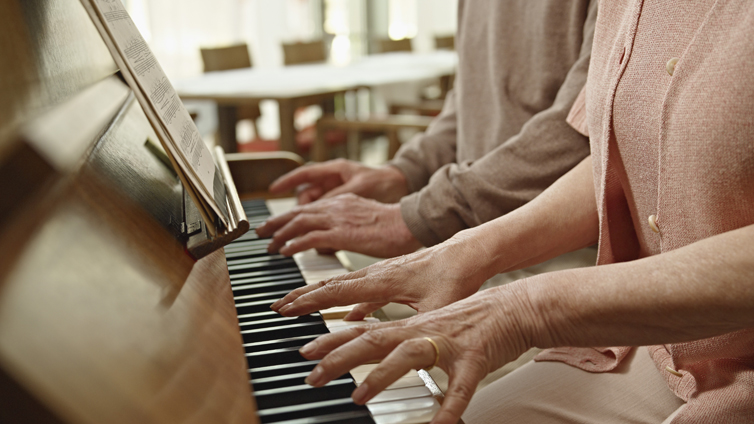
Chunking – The Secret to Remembering Music
When adults struggle with memory at the piano, it often feels like there is simply too much to hold at once.
- Too many notes.
- Too many movements.
- Too much information flowing together.
The brain doesn’t fail because it can’t learn.
It struggles because it’s being asked to remember too much at one time.
This is where chunking becomes incredibly helpful.
Chunking means breaking music into small, manageable sections—and learning them one at a time.
Instead of seeing a piece as something long and complicated, you begin to see it as a series of short, familiar moments.
A chunk might be:
-
One or two measures
-
A short phrase
-
A simple hand pattern
There is no correct size.
The only rule is that the chunk should feel comfortable.
When you practice a small section slowly and repeatedly, your brain has time to absorb it.
Memory settles more easily.
Confidence grows.
Once one chunk feels familiar, you move on to the next.
There is no rush to connect everything immediately.
In fact, learning pieces in small sections often leads to stronger memory than playing through from beginning to end.
Chunking also reduces frustration.
When you focus on a small area, mistakes feel manageable.
You are no longer overwhelmed by the entire piece.
This sense of control is important—especially for adult learners.
You may also find it helpful to begin each practice session by revisiting just one or two chunks.
This gentle repetition reinforces memory without effort.
Over time, these chunks begin to connect naturally.
What once felt like separate pieces slowly becomes one continuous flow.
This process takes patience—but it is reliable.
Chunking works because it respects how the brain learns best:
in small, meaningful steps.
You are not expected to remember everything at once.
You are only expected to stay with one small section until it feels familiar.
That is enough.
In the next chapter, we’ll talk about why mistakes tend to increase when you rush—and how slowing down actually improves memory and confidence.

Why Mistakes Increase When You Rush
When mistakes start to appear, many adults assume they need to try harder.
They push forward.
They speed up.
They hope momentum will carry them through.
But rushing almost always has the opposite effect.
When you rush, the brain has less time to process what the hands are doing.
Coordination becomes less precise.
Memory struggles to keep up.
This is why mistakes often appear in clusters.
One small slip creates tension.
Tension leads to more slips.
And suddenly, everything feels unstable.
This is not because you lack ability.
It is because the system is overloaded.
The brain and hands need time to communicate.
When you slow down, that communication improves.
Slower playing gives your mind time to anticipate what comes next.
It allows your hands to move with intention rather than reaction.
And perhaps most importantly, slowing down reduces pressure.
Pressure narrows attention.
Calm widens it.
Many adults are surprised to discover that when they slow a piece down—even significantly—mistakes begin to disappear.
The music may feel less exciting at first.
But clarity improves.
Accuracy improves.
Confidence improves.
Speed is a result of comfort—not effort.
Trying to force speed before comfort is established only creates tension.
If you notice yourself rushing, treat it as information rather than a problem.
It’s a signal to slow down.
To breathe.
To simplify.
You might:
-
Reduce tempo
-
Play one hand at a time
-
Focus on a single chunk
These are not steps backward.
They are steps toward stability.
Learning piano later in life rewards patience far more than urgency.
So when mistakes appear, don’t push harder.
Slow down.
In the next chapter, we’ll talk about staying calm and continuing forward when a mistake does happen—without stopping or starting over.
The “Next Note” Mindset
One of the most powerful skills you can develop at the piano has nothing to do with technique.
It’s learning how to continue.
Many adults stop playing the moment a mistake happens.
They pause.
They restart.
They apologise to themselves.
This reaction is understandable—but it’s not helpful.
Music does not require perfection.
It requires movement.
The “next note” mindset is about staying present.
Instead of focusing on what just went wrong, you gently place your attention on what comes next.
One note at a time.
When a mistake happens, do not stop.
Do not rewind.
Simply continue forward as calmly as you can.
This may feel uncomfortable at first.
But over time, it builds confidence and flow.
The ability to keep going teaches your brain that mistakes are not emergencies.
They are moments—nothing more.
This mindset also improves memory.
When you stop and restart repeatedly, the brain learns to depend on the beginning of the piece.
When you continue, it learns the entire structure.
Playing through mistakes strengthens continuity.
It also changes how you feel.
Instead of frustration, there is acceptance.
Instead of tension, there is curiosity.
You begin to trust yourself.
The “next note” mindset is especially helpful when practicing alone.
There is no audience.
No judgment.
No pressure to perform.
You are allowed to play imperfectly.
And when you do, something interesting happens.
Music starts to feel like music again—not a test.
If you catch yourself stopping often, gently remind yourself.
“One note at a time.”
That is enough.
In the next chapter, we’ll begin shifting focus toward emotional comfort—starting with how to practice without getting annoyed at yourself.
How to Practice Without Getting Annoyed at Yourself
Many adults don’t realise this at first, but the biggest obstacle to enjoyable practice is often not the music.
It’s the way we talk to ourselves while playing.
A missed note.
A hesitation.
A moment of forgetfulness.
And suddenly, irritation appears.
Thoughts like,
“I should know this by now,”
or
“Why am I still making these mistakes?” begin to surface.
This inner commentary may seem harmless—but over time, it drains enjoyment and confidence.
The first step in changing this is awareness.
Notice when irritation begins.
It often shows up quietly—through tension, sighs, or a sudden urge to stop.
That moment is important.
It’s your signal to soften—not to push.
Instead of criticising yourself, try gently changing the conversation.
Replace judgment with observation.
Rather than,
“I messed that up,”
try,
“That part still needs time.”
This small shift matters.
Learning piano is not a performance.
It is a process.
Mistakes are information—not proof of failure.
Another helpful approach is to shorten the task.
If annoyance appears, you may be asking too much of yourself in that moment.
You can:
-
Slow the tempo
-
Reduce the section size
-
Switch to something familiar
There is no need to stay in frustration.
Ending a session calmly is far more valuable than forcing yourself through irritation.
It’s also helpful to remember why you are here.
You are not practicing to prove worth.
You are practicing because music brings something meaningful into your life.
Kindness toward yourself is not indulgent.
It is practical.
When practice feels safe, the brain stays open.
When the brain stays open, learning happens naturally.
So the next time irritation appears, pause.
Breathe.
Soften your shoulders.
Return to something comfortable.
You are not behind.
You are learning.
In the next chapter, we’ll talk about recognising the early signs of frustration—and how to stop before it takes over.
Recognising the First Signs of Frustration
Frustration rarely arrives all at once.
It usually begins quietly.
A small sigh.
A tightening of the shoulders.
A sense of impatience when something doesn’t work immediately.
Many adults only notice frustration once it has already taken over.
At that point, practice feels heavy and unpleasant.
Learning to recognise the early signs changes everything.
Frustration often shows up in the body before it shows up in thoughts.
You may notice:
-
Your jaw clenching
-
Your breathing becoming shallow
-
Your hands pressing harder on the keys
These are not signs that you should try harder.
They are signs that it’s time to pause.
Another early sign is mental repetition.
Playing the same mistake again and again without improvement often means your mind is tired.
Rushing is another signal.
If you feel yourself speeding up, it’s usually because tension has crept in.
The moment you notice any of these signs, something important is happening.
Your nervous system is asking for relief.
Responding early prevents frustration from turning into discouragement.
You might:
-
Stop and take a few slow breaths
-
Slow the tempo dramatically
-
Switch to something familiar
-
Or end the session altogether
Stopping is not giving up.
It is listening.
Learning to stop early protects your relationship with the piano.
It keeps practice from becoming something you avoid.
Over time, recognising these early signs becomes natural.
You begin to notice them sooner—and respond more gently.
This is a skill.
And like any skill, it improves with awareness.
In the next chapter, we’ll talk about what to do after a bad practice session—so it doesn’t affect how you feel the next day.
What to Do After a Bad Practice Session
Every learner has bad practice sessions.
Days where nothing feels right.
Where mistakes pile up.
Where frustration arrives before enjoyment.
These sessions can feel discouraging—but they don’t have to be damaging.
What matters most is not what happened during the session.
It’s what you do after.
The first thing to remember is this.
A bad session does not erase progress.
It does not mean you’ve gone backward.
It does not mean tomorrow will be the same.
Learning is not measured by single days.
After a difficult session, resist the urge to analyse everything that went wrong.
That often keeps frustration alive longer than necessary.
Instead, take a clean break.
Close the piano.
Step away.
Do something grounding—walk, stretch, or simply rest.
This helps your nervous system reset.
Later, when the emotion has settled, gently reframe the experience.
Ask yourself one simple question:
“What made today harder than usual?”
It might have been:
-
Low energy
-
Distraction
-
Trying to do too much
-
Practicing when you were already tired
None of these are failures.
They are information.
Use that information to adjust—not to judge.
The next time you practice, make it intentionally easier.
Shorter session.
Slower tempo.
More familiar material.
This sends a powerful message to your brain:
“The piano is still safe.”
One good, calm session after a difficult one repairs confidence quickly.
And if you need to skip a day, that’s fine.
Returning when you feel ready is part of the process.
Bad practice sessions are not interruptions.
They are part of learning.
How you respond to them determines whether they pass—or linger.
In the next chapter, we’ll talk about turning practice into a relaxation ritual—so the piano becomes a place of calm rather than effort.
Turning Practice into a Relaxation Ritual
At its best, piano practice does not feel like work.
It feels like a pause.
A quiet moment.
A space in the day that belongs only to you.
For many adults, this shift—from effort to relaxation—is what makes piano sustainable.
A relaxation ritual does not require long sessions or perfect conditions.
It requires intention.
You might begin by choosing a consistent time or setting.
Not because you must—but because familiarity feels comforting.
Perhaps it’s the same chair.
The same lamp.
The same few minutes each day.
Before you play, take a moment to settle.
Place your hands on the keys.
Take a slow breath.
Let your shoulders soften.
This simple pause tells your body it’s safe to relax.
As you play, allow yourself to listen without judgement.
Notice the sound rather than the mistakes.
Let the music fill the space.
There is no need to rush.
When practice becomes a ritual, the focus shifts from outcome to experience.
You are no longer asking,
“Did I improve today?”
You are simply present with the instrument.
This is where enjoyment grows.
Ending practice is just as important as beginning.
When you feel calm—or even slightly refreshed—stop.
Leave while the experience is still positive.
That feeling carries forward into the next session.
Over time, the piano becomes associated with calm rather than effort.
And when something feels calming, you naturally return to it.
In the next and final chapter, we’ll talk about why enjoyment itself is the fastest learning tool you have—and how trusting that can change everything.
Why Enjoyment Is the Fastest Learning Tool
By now, you may have noticed something important.
When practice feels calmer, learning feels easier.
This is not a coincidence.
Enjoyment is not a reward you earn after you improve.
It is the environment in which improvement happens.
When you enjoy playing—even in small moments—your mind stays open.
When the mind stays open, memory works better.
And when memory works better, confidence follows naturally.
This is why forcing yourself to practice rarely leads to lasting progress.
Pressure closes the mind.
Enjoyment keeps it curious.
Many adults believe learning must feel serious to be effective.
But in reality, the brain learns fastest when it feels relaxed and engaged.
This is especially true later in life.
Enjoyment reduces fear of mistakes.
It softens self-judgment.
It makes repetition feel comforting rather than tedious.
You begin to play because you want to, not because you feel you should.
That desire is powerful.
It brings you back to the piano again and again—without effort.
And each return strengthens familiarity, memory, and ease.
Enjoyment does not mean every session feels wonderful.
It means the overall experience feels welcoming.
You trust yourself.
You trust the process.
When frustration appears, you know how to respond.
When memory fades, you remain calm.
When progress feels slow, you stay patient.
This is real progress.
Learning piano later in life is not about chasing mastery.
It’s about building a relationship with music that fits who you are now.
And enjoyment is what keeps that relationship alive.
So let yourself enjoy simple sounds.
Let yourself repeat pieces you love.
Let yourself stop early and return tomorrow.
You are not learning piano despite your age.
You are learning it with wisdom, patience, and care.
And that makes all the difference.

Tracking Progress Without Pressure
At some point, many adults begin to wonder if they are truly improving.
They don’t want to rush.
They don’t want pressure.
But they still want reassurance that what they’re doing is working.
This is completely natural.
The challenge is that traditional ways of tracking progress often create stress instead of clarity.
Counting mistakes.
Timing speed.
Comparing pieces completed.
These methods tend to focus on what’s missing rather than what’s growing.
For adult learners, progress is better measured in feelings, not figures.
Ask yourself gentle questions instead.
Do I feel more comfortable sitting at the piano than I did before?
Do pieces feel more familiar over time?
Do mistakes bother me less than they used to?
These are powerful signs of progress.
You may also notice quieter changes.
You find your starting position more easily.
You recover from slips more calmly.
You remember sections with less effort.
These improvements often happen gradually—and they last.
Another helpful way to track progress is through return frequency.
If you are coming back to the piano willingly, something is working.
Progress that feels forced rarely survives.
Progress that feels inviting tends to continue.
If you enjoy marking progress, keep it simple.
You might:
-
Note the date you started a piece
-
Write one sentence about how practice felt
-
Circle pieces that now feel familiar
There is no need for detail.
Tracking should support confidence—not create evaluation.
It’s also important to allow progress to look uneven.
Some weeks you’ll feel growth.
Other weeks may feel quiet.
That does not mean progress has stopped.
Learning often happens beneath the surface before it becomes noticeable.
So if you ever feel uncertain, return to this idea.
If the piano feels more familiar, more welcoming, and less intimidating than it once did—you are moving forward.
That is real progress.
In the next chapter, we’ll talk about staying motivated when progress feels slow—and how to trust the process during quieter periods.
Staying Motivated When Progress Feels Slow
There will be periods when progress feels quiet.
Nothing seems to improve dramatically.
Nothing feels broken either.
It just feels… slow.
These moments can be unsettling.
Many adults assume that slow progress means something has gone wrong.
They begin to doubt themselves.
They wonder if they should be further along by now.
But this stage is not a problem.
It is a natural part of learning.
Progress does not arrive in a straight line.
It often moves in gentle waves.
There are times of visible improvement—and times of quiet consolidation.
During these quieter periods, your brain is still working.
Skills are settling.
Movements are becoming familiar.
Confidence is stabilising.
This type of progress is less noticeable—but more durable.
The key to staying motivated during slow periods is shifting what you pay attention to.
Instead of looking for dramatic improvement, notice small comforts.
Does sitting at the piano feel more natural than it once did?
Do your hands find their place more easily?
Do you feel less tense when you begin?
These changes matter.
Another helpful strategy is to gently revisit something you enjoy.
A familiar piece.
A simple pattern.
A sound that feels pleasant.
Enjoyment reminds you why you started.
It reconnects you with the experience rather than the outcome.
You can also shorten sessions during these periods.
Less time—but more calm—often reignites interest.
Motivation rarely returns through pressure.
It returns through kindness.
If progress feels slow, remind yourself of this.
You are not stuck.
You are stabilising.
And stabilising is what allows future growth.
In the next chapter, we’ll talk about how to return after a break—without guilt, pressure, or the feeling that you’ve fallen behind.
How to Return After a Break (Without Guilt)
At some point, most people take a break from the piano.
It might be a few days.
It might be a few weeks.
Sometimes, life simply takes over.
When this happens, many adults hesitate to return.
They think,
“I’ve lost momentum.”
“I’ve probably forgotten everything.”
“I should have been more disciplined.”
This guilt makes restarting harder than it needs to be.
So let’s reset that idea right now.
A break is not a setback.
It is part of life.
Nothing has been erased.
Your hands remember more than you think.
Your ears remember more than you expect.
And even if things feel unfamiliar at first, that does not mean progress is gone.
The most important thing when returning is how you begin.
Do not try to “catch up.”
Do not start where you left off with high expectations.
Instead, start gently.
Sit at the piano and play something familiar.
Even a few notes is enough.
This first session is not about improvement.
It is about re-establishing comfort.
Short sessions are especially important after a break.
Five to ten minutes is perfect.
Stopping early protects confidence and prevents frustration.
You may notice that things return quickly once you relax.
Memory often wakes up after one or two calm sessions.
This is why returning kindly works so well.
There is no need to explain the break.
There is no need to make up for lost time.
Simply begin again.
Learning piano later in life is not about maintaining streaks.
It’s about maintaining a healthy relationship with the instrument.
And healthy relationships allow pauses.
In the next chapter, we’ll talk about designing your personal piano lifestyle—so piano fits naturally into your life instead of competing with it.
Designing Your Personal Piano Lifestyle
By now, you may notice that piano no longer feels like a task.
It feels more familiar.
More approachable.
More like something that belongs in your life.
This is where learning becomes sustainable.
A piano lifestyle does not mean strict schedules or constant practice.
It means piano fits naturally into your days—without pressure.
Your lifestyle might include:
-
Short, calm sessions a few times a week
-
Occasional longer sessions when energy allows
-
Periods of lighter playing during busy times
All of this is valid.
There is no “correct” way to include piano in your life.
Some people enjoy a quiet morning session.
Others prefer an evening wind-down.
Some play regularly, others in gentle cycles.
The key is that piano supports your life—it does not compete with it.
A personal piano lifestyle also honours how you feel.
On days when energy is low, you play simply.
On days when focus is strong, you explore more deeply.
You no longer force yourself into a routine that doesn’t fit.
Instead, you adjust.
This flexibility is not a weakness.
It is wisdom.
Over time, piano becomes something you return to for calm, expression, or enjoyment—just like reading, walking, or listening to music.
It becomes familiar and comforting.
And when something feels comforting, it stays.
As you continue, trust what you’ve learned about yourself.
You now know how to practice gently.
You know how to handle frustration.
You know how to return after breaks.
That knowledge allows piano to remain a positive presence in your life.
In the final chapter, we’ll close with a gentle reminder—that you are doing better than you think, and that this journey is already a success.
Final Encouragement – You’re Doing Better Than You Think
If you’ve made it this far, I want you to pause for a moment.
Take a breath.
Learning piano later in life is not a small thing.
It takes curiosity.
It takes courage.
And it takes kindness toward yourself.
Many people think progress only counts if it’s visible and obvious.
But the most important changes often happen quietly.
You sit down with less tension.
You play with more patience.
You recover from mistakes more calmly.
These are not small achievements.
They are signs that you are learning in a way that truly suits you.
You are no longer fighting the piano.
You are learning to work with it.
That matters.
There may still be days when things feel slow.
There may still be moments of doubt.
That does not undo what you’ve built.
Every calm session, every gentle return, every moment of enjoyment has added something real.
You have changed how you approach learning.
And that change will continue to support you.
So if you ever wonder whether you’re doing enough, remember this.
If you are still coming back to the piano—
- still listening,
- still exploring,
- still enjoying moments of sound—
then you are succeeding.
You don’t need to hurry.
You don’t need to compare.
And you don’t need to prove anything.
This is your journey.
And you are exactly where you need to be.
Thank yourself for taking the time to learn in a way that respects who you are.
And whenever you’re ready, the piano will be waiting.